Why Grass-Fed Beef? Better for You, Better for the Land
posted on
October 16, 2026
Why Grass-Fed Beef? The Health and Environmental Case
Not all beef is created equal. What a cow eats shapes the meat on your plate, the soil under its hooves, and the land it leaves behind for the next generation.
Until the 1940s, nearly all American beef was finished on grass. Today most cattle spend most of thier life in feedlots eating corn and soy to put on weight fast. Grass-fed beef is a return to the older way, and the research behind it keeps getting more interesting.
Grass-fed vs. grass-finished. Almost every calf starts life on pasture, so "grass-fed" on its own can be misleading. What matters is how the animal is finished, meaning what it eats in the months before harvest. At Dutch Meadows Farm, our cattle are 100% grass-fed and grass-finished. They eat pasture and forage their whole lives, never grain.
Here's what that means for your health, for the land, and for the flavor of your dinner.
The health benefits
Grass changes the fat. A cow eating fresh forage builds a different fatty acid profile than one eating grain, and that difference shows up in study after study. A widely cited review in Nutrition Journal found grass-finished beef consistently higher in omega-3s, CLA, and fat-soluble antioxidants.
1. More omega-3 fatty acids. Omega-3s support heart and brain health, and most of us don't get enough. Grass-fed beef carries more of them per gram of fat than grain-fed beef.
2. A better omega-6 to omega-3 balance. The modern diet is heavy in omega-6 fats from seed oils and grain. Grass-fed beef tends to have a much lower omega-6:omega-3 ratio, which is closer to what our bodies evolved eating.
3. More CLA. Conjugated linoleic acid is a naturally occurring fat found mostly in meat and dairy from grazing animals. Grass diets raise CLA levels and also raise vaccenic acid, which the body converts into CLA. Researchers are studying CLA for its potential roles in metabolism and inflammation.
4. More vitamins and antioxidants. Fresh pasture is rich in carotenoids and vitamin E. Those carry through into the meat, which is why grass-fed fat often has a slightly golden color. Grass-fed beef has also been measured higher in iron.
5. Leaner overall. Grass-finished beef is typically lower in total fat than grain-fed beef, while still delivering the same high-quality protein, B12, zinc, and iron beef is known for.
The environmental benefits
Well-managed grazing can build soil instead of depleting it. The key is how the cattle graze, not just that they're outside.
Healthier, carbon-rich soil. When cattle are moved frequently through small paddocks and each pasture gets a long rest to regrow, roots grow deeper and soil organic matter builds up. This is often called regenerative or adaptive grazing. A study of paired farms in the southeastern U.S. found adaptively grazed pastures held about 13% more soil carbon than conventionally grazed neighbors, much of it in stable forms that persist long-term (summary via Savory Institute). An eleven-year study in Michigan measured adaptively grazed pastures sequestering about 1.7 metric tons of carbon per hectare per year (MSU).
Better water and less erosion. Healthy soil acts like a sponge. Gabe Brown, a North Dakota rancher and co-founder of the regenerative consulting firm Understanding Ag, points out that every 1% increase in soil organic matter lets an acre hold roughly 20,000 more gallons of water. That's water that soaks in and feeds the grass instead of running off and carrying topsoil with it. On his own ranch, Brown has rebuilt organic matter from under 2% to 5 to 6% or more, which means his soil can store tens of thousands of extra gallons per acre.
Burke Teichert of Understanding Ag likes to say there's "only one legal way to steal water": make sure the rain that falls on your land soaks in and stays there. Perennial pasture does exactly that. Living roots and year-round ground cover soften the impact of rain and open channels that pull water down into the ground instead of across it. Here in Lancaster County, where so many streams feed the Chesapeake Bay, that matters.
Manure as fertilizer, not waste. On pasture, cattle spread their own manure across the fields, feeding soil life naturally. In a feedlot, manure piles up and becomes a disposal problem.
No feed crops required. Grass-finished cattle don't depend on huge acreages of corn and soy grown with synthetic fertilizer and pesticides. They turn grass, which people can't eat, into nutrient-dense food.
Room for wildlife. Diverse pastures support pollinators, ground-nesting birds, and soil organisms that monoculture fields can't.
Livestock as part of the system. Grazing animals aren't automatically good or bad for land. Poorly managed grazing strips vegetation and leaves soil bare. Well-managed grazing does the opposite. The Soil Health Academy, which trains farmers in regenerative practices, points to a handful of principles that work together: keep the soil covered, keep living roots in the ground, increase plant diversity, minimize disturbance, and move livestock based on how the grass is growing and recovering. Cattle on pasture can check every one of those boxes.
What it looks like on a real farm. The Soil Health Academy profiled Luke Bergler, a Minnesota farmer who moves his 50 cow-calf pairs to fresh paddocks every 24 to 48 hours. His soil now absorbs rain so well that two ponds that used to fill with runoff are nearly dry, even in wet years. He reports far more earthworms, dragonflies, monarchs, and birds, and he cut his days of hauling feed from over 200 a year to under 140, with manure hauling dropping from 80 to 100 loads a year down to seven. The cattle do the work, and the land gets healthier for it.
Better for the animals, better on the plate
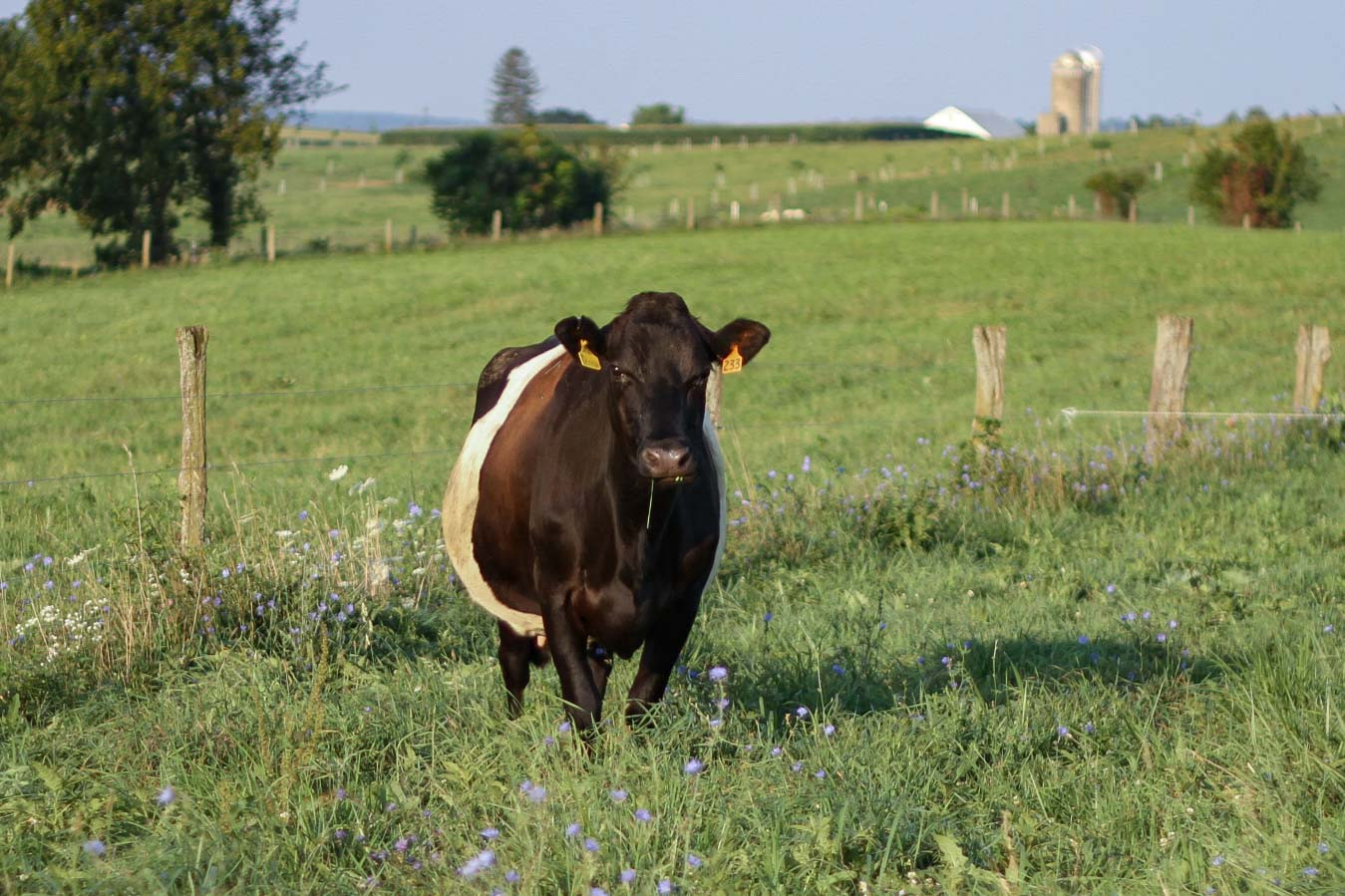
Cattle are built to graze. On pasture they walk, forage, and live in a herd with sunshine and fresh air, the life their digestive systems were designed for.
That life shows up in the flavor. Grass-fed beef has a richer, more complex taste that changes subtly with the seasons and the pasture. For a lot of people, it tastes like beef used to taste.
Tips for cooking grass-fed beef
Because it's leaner, grass-fed beef cooks a little faster than grain-fed beef. A few simple adjustments make all the difference:
- Lower the heat and watch the clock. Aim for rare to medium, and pull steaks a few degrees before your target temperature.
- Let it rest. Give steaks and roasts 5 to 10 minutes before slicing so the juices stay put.
- Go low and slow for tougher cuts. Roasts, brisket, and short ribs shine when braised.
- Bring it to room temperature first. Take steaks out of the fridge about 30 minutes before cooking for even results.
- Use a little extra fat. A spoonful of our grass-fed tallow or butter in the pan adds richness to lean cuts.
Taste the difference
At Dutch Meadows Farm in Lancaster County, our cattle live their whole lives on pasture, rotated through fresh grass and never fed grain. We're not certified organic, but our practices go above and beyond what organic requires, because we believe the best beef comes from healthy animals on healthy land.
Order our 100% grass-fed beef online for home delivery, pick up at one of our drop sites, have it shipped to your door, or stop by the farm store. Your body, and the land, will thank you.